
We build the tools we need for working with AI agents, and we open-source them.
Everything here is written in TypeScript and runs on your own machine. Pick the one that matches what you are trying to do.
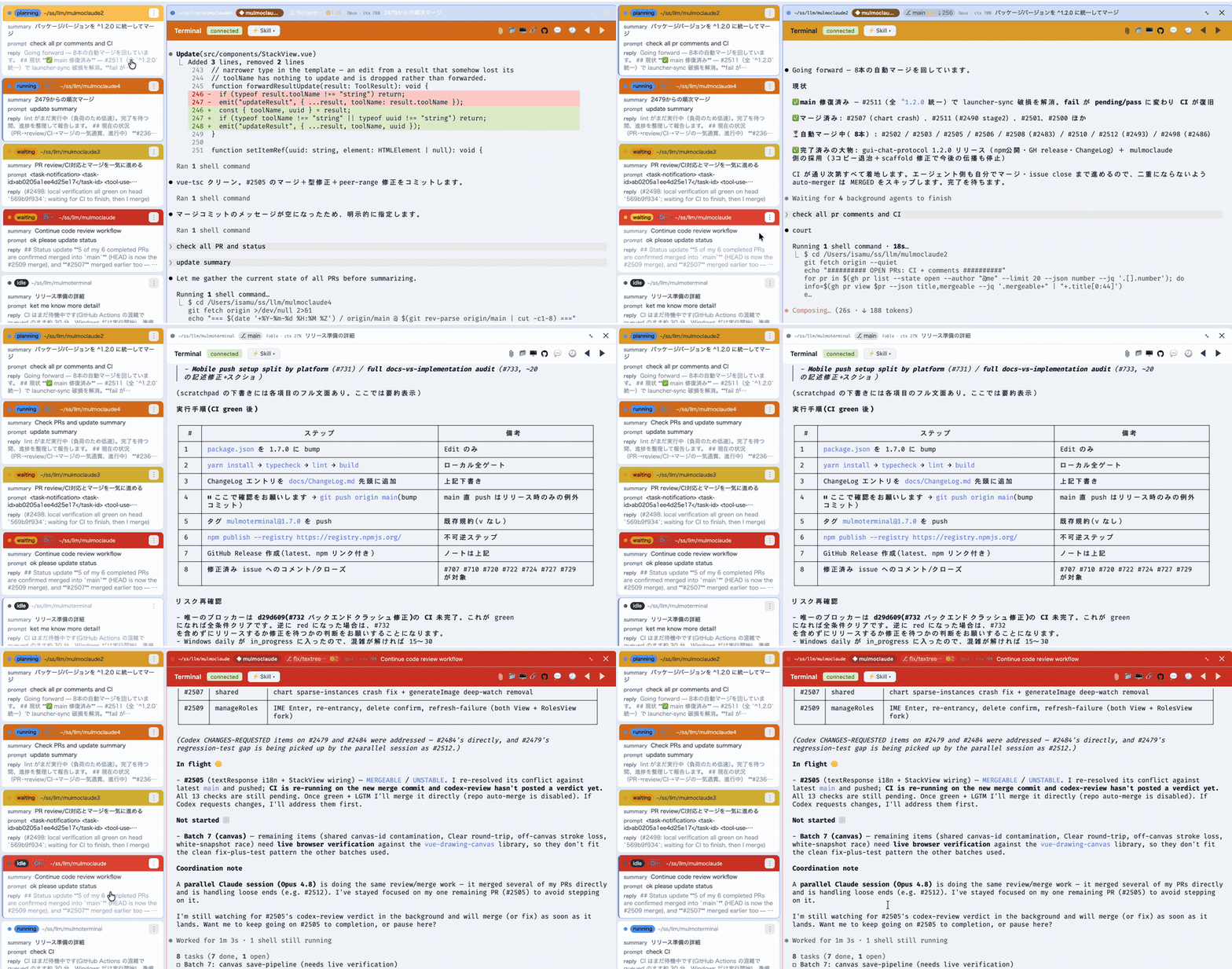
MulmoTerminal — a browser terminal grid for parallel coding agents. Claude Code, Codex and six more CLIs side by side, each cell a real pty, with the one that needs you marked in colour. Sessions survive a reload (tmux), work isolates in git worktrees, and a push reaches your phone when a turn finishes.
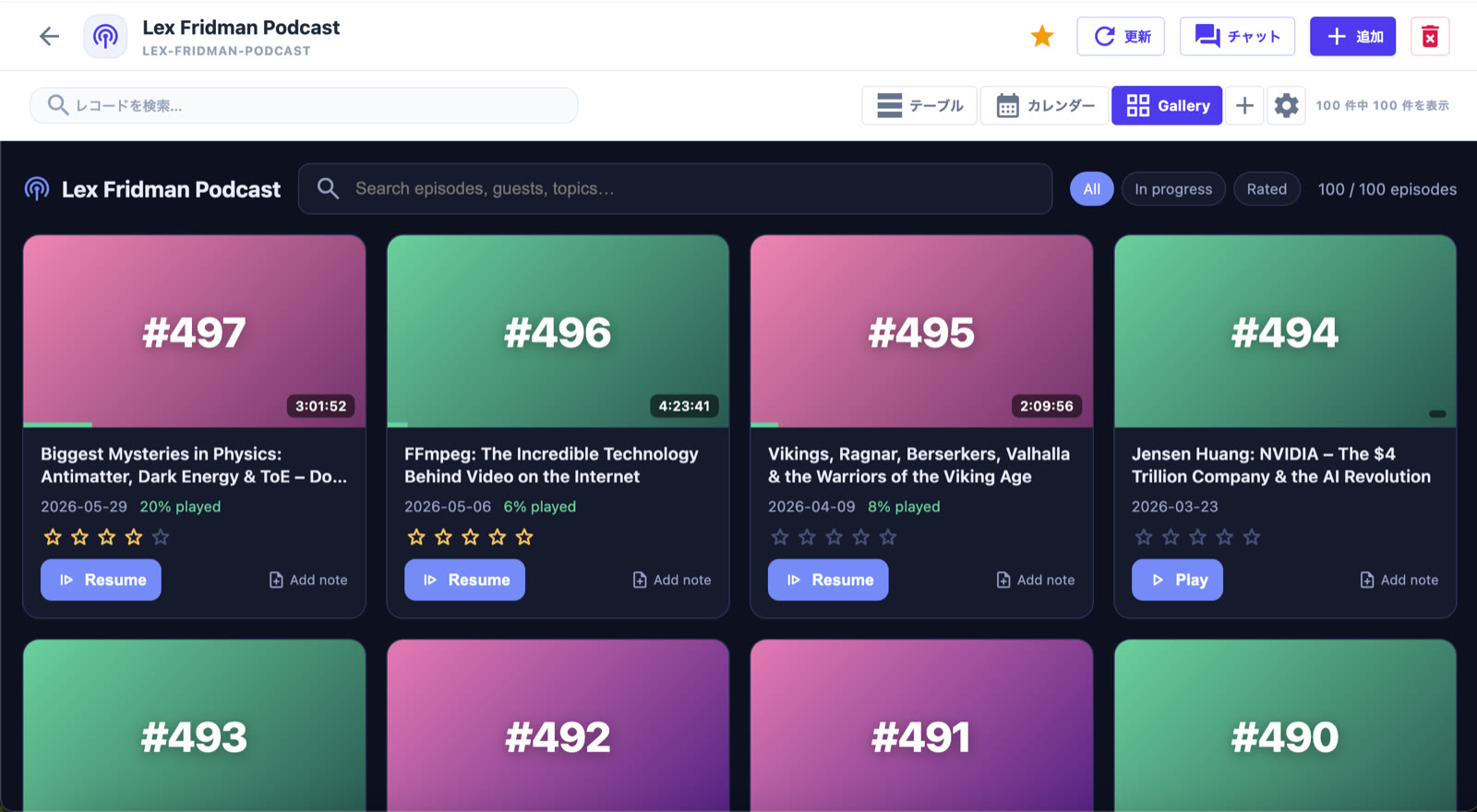
npx mulmoterminal@latestMulmoClaude — chat with Claude Code where the answer can be a wiki page, a spreadsheet, a chart, a form or a 3D scene instead of more text. Memories, data and apps stay as plain files in your workspace, readable without us.
npx mulmoclaude@latestMulmoCast — write a script, get a narrated video, a podcast episode or a deck. Voice cloning, AI-generated music, lip sync, and image and video models from several providers.
npx mulmocastAlso as a desktop app: mulmocast-app.
MulmoChat — in active development again. A research prototype for chat that is not a text stream: you keep speaking, and images materialise, maps become explorable and games turn playable on the canvas beside the conversation. Each kind of answer is a plugin on the GUI Chat Protocol — the same protocol MulmoClaude and MulmoTerminal speak — so teaching it something new is a package rather than a fork.

Run it from source, with your own API keys:
git clone https://github.com/receptron/MulmoChat.gitThe idea · Architecture · Writing a plugin
GraphAI — describe an agentic workflow as a declarative dataflow graph in YAML or JSON, and run it. Nodes run as soon as their inputs are ready, so concurrency is a property of the graph rather than something you write. graphai.info
@receptron/laya — run Laya, an open-source System-1 decision model, from Node.js via ONNX Runtime. Typed questions in, calibrated probabilities out, in one forward pass. No Python at runtime.
SlashGPT — our earlier LLM-agent experiment, from
before the category had a name, and the ground the rest of this work was built on. A new agent is
a manifest file, and /name switches between them.
Satoshi Nakajima, architect of Windows 95 at Microsoft, and Isamu Arimoto, his long-time development partner. We have built together since 2015, across four unrelated domains, and the core has been open source every time.
More at the Singularity Society.
MulmoTerminal, MulmoClaude, MulmoChat, GraphAI, SlashGPT and @receptron/laya are MIT. MulmoCast is AGPL-3.0.
